
By: Bertrand Gonthiez, Mueller regional sales manager for Europe
Sébastien Picollo is operations manager at SATEG, a subsidiary of SAUR that distributes drinking water to more than 35,000 subscribers across nearly 200 municipalities in the Pau region of south-western France.
SAUR operates six drinking water production plants supplying several large reservoirs, with an annual production volume of 8.5 million m3. The distribution network spans 1,200km and comprises predominantly cast iron and asbestos-cement pipes in nominal diameters of DN100, DN150 and DN200, alongside PVC pipes in smaller sections ranging from DN60 to DN110.
Repairing a suspended pipeline in Arzacq-Arraziguet
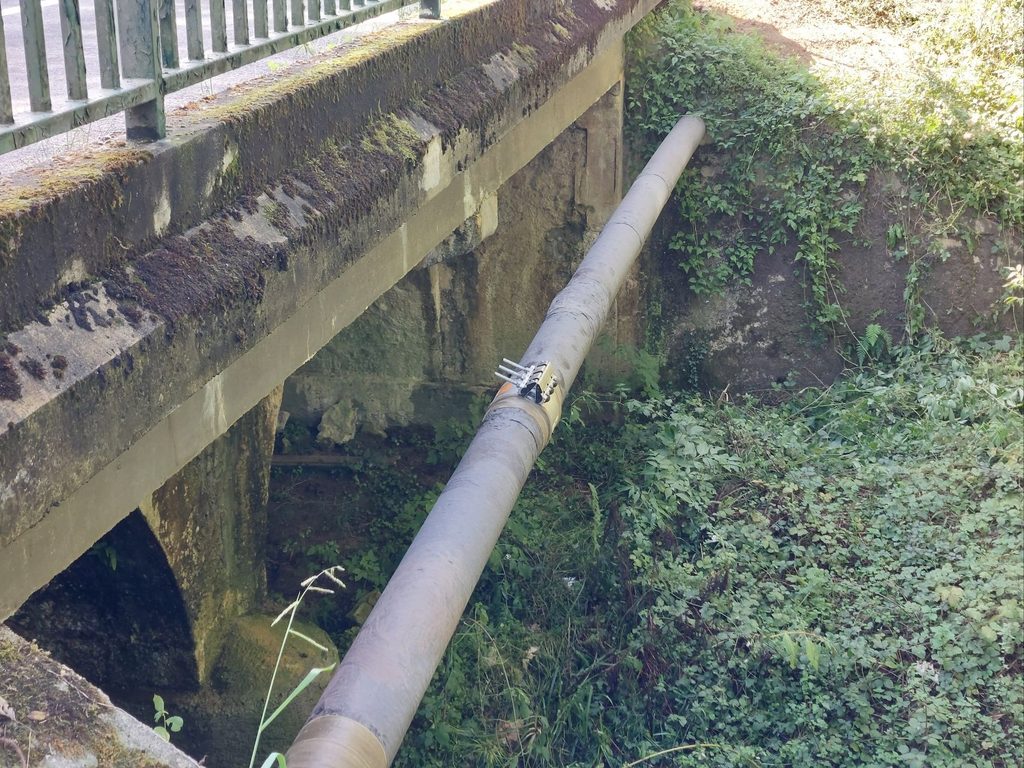
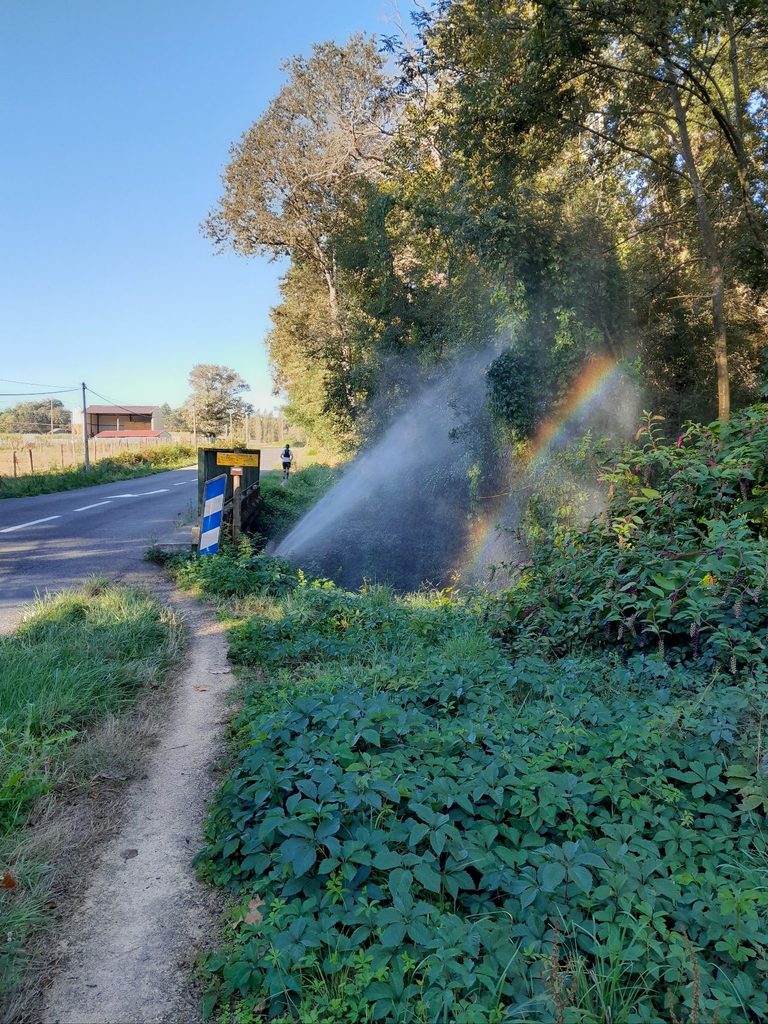
SATEG was notified of a leak on a pipeline running alongside a bridge and crossing a river in Arzacq-Arraziguet, a village of 1,093 inhabitants in the Pyrénées-Atlantiques department of south-western France.
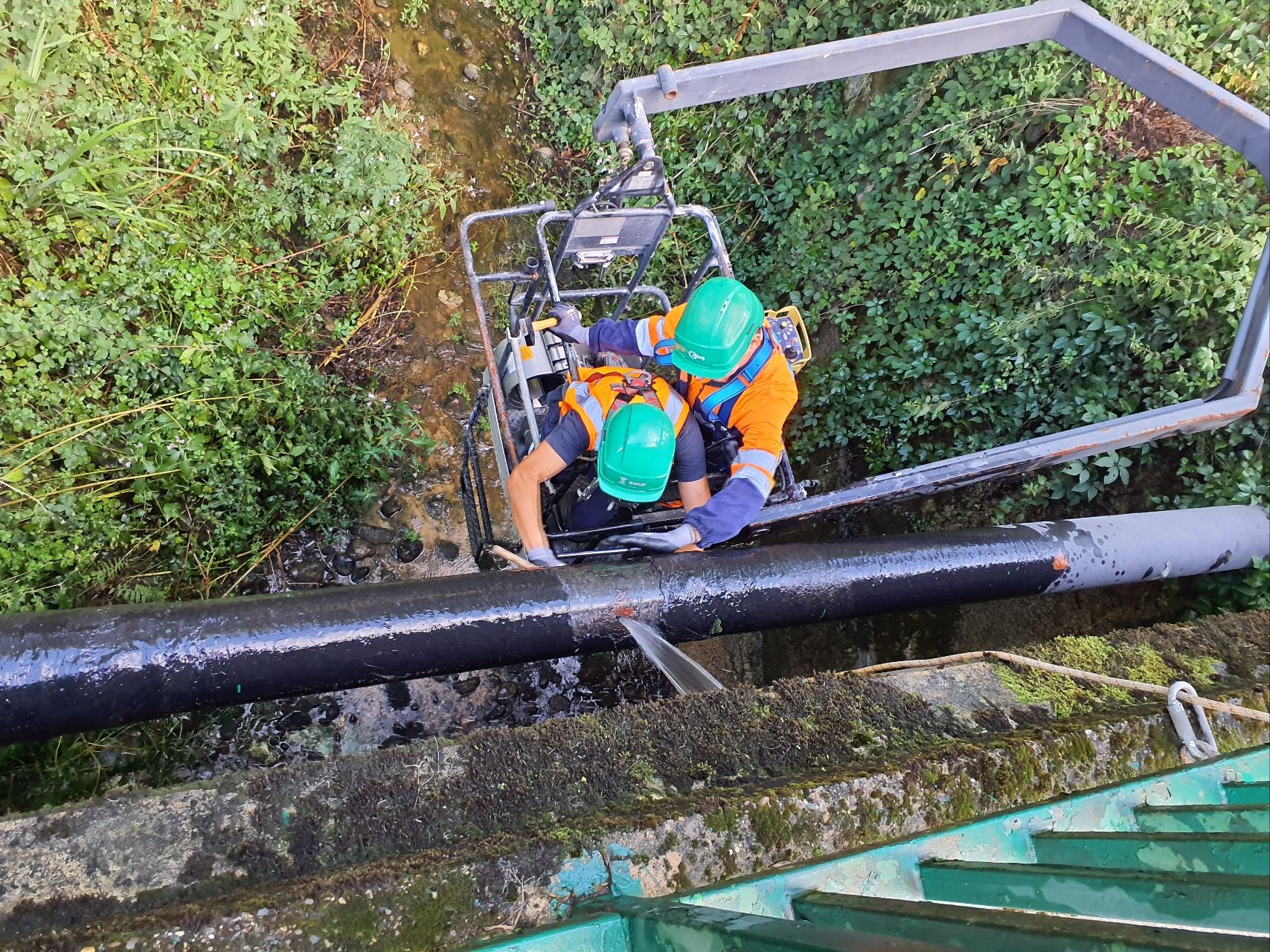
The affected section was a suspended DN200 steel pipe forming part of a network consisting largely of asbestos-cement pipes. The leak, visible from the road, was discharging water at 15m³/h under a pressure of 11 bar.
Isolating the pipeline was not possible, as it supplied several nearby farms. Draining the pipe was also not an option, making conventional welding impractical while water remained in the line. Access was further complicated by the pipe’s position above the river.
SATEG needed to restore the pipeline quickly while minimising service interruptions and ensuring the safety of its repair crew. An aerial work platform was deployed to provide safe access to the suspended pipe. With two other leaks requiring attention that day, the team also needed to complete the repair efficiently.
SATEG selected Krausz’s Repamax permanent repair sleeve, citing its ease of installation and reliability under high-pressure conditions. The sleeve is available for nominal diameters ranging from DN40 to DN1800. For this application, a 210mm-wide sleeve was selected. Although the repair involved a steel pipe, the product can also be used on asbestos-cement pipelines.
A pressure-assisted seal without welding
The Repamax sleeve offered an alternative to welding, which was unsuitable for a live pipeline that could not be drained. Its lightweight construction and clamping mechanism allowed the crew to handle and install the sleeve without substantial additional support.
The sleeve’s radial closure design and sealing system also helped reduce the risk of installation errors. These features were particularly important because the pipe remained pressurised throughout the repair.
According to Picollo, the installation process was straightforward compared with older repair sleeves that used rigid rubber gaskets and did not consistently achieve a reliable seal.
The sleeve incorporates a hydraulically pressure-assisted gasket that expands as internal water pressure increases, helping maintain the seal. Its design also accommodates up to three degrees of dynamic deflection at each end, helping reduce the risk of future damage associated with heavy traffic on the bridge and temperature variations.
The absence of welding and the use of fully stainless-steel components provide corrosion resistance, making the sleeve suitable for demanding water infrastructure applications.
Reducing repair time and service disruption
For water network operators, repairing leaks on live pipelines presents operational and safety challenges, particularly where isolation is not possible and access is restricted. Equipment that enables a reliable repair without draining the pipe can reduce both service disruption and the time crews spend working in potentially hazardous conditions.
Picollo said the team completed the repair in 30mins, allowing it to move on to the other leaks scheduled for the day.
The Repamax sleeve can be installed either as a push-fit connection between pipes or wrapped around a damaged section to carry out a repair. Its versatility and wide diameter tolerance allow it to accommodate different pipe sizes and applications across water and wastewater networks.
By covering a broad range of diameters and serving both connection and repair functions, the sleeve can also reduce the need for operators to stock separate coupling and wrap-around repair products, potentially lowering inventory costs and storage requirements.