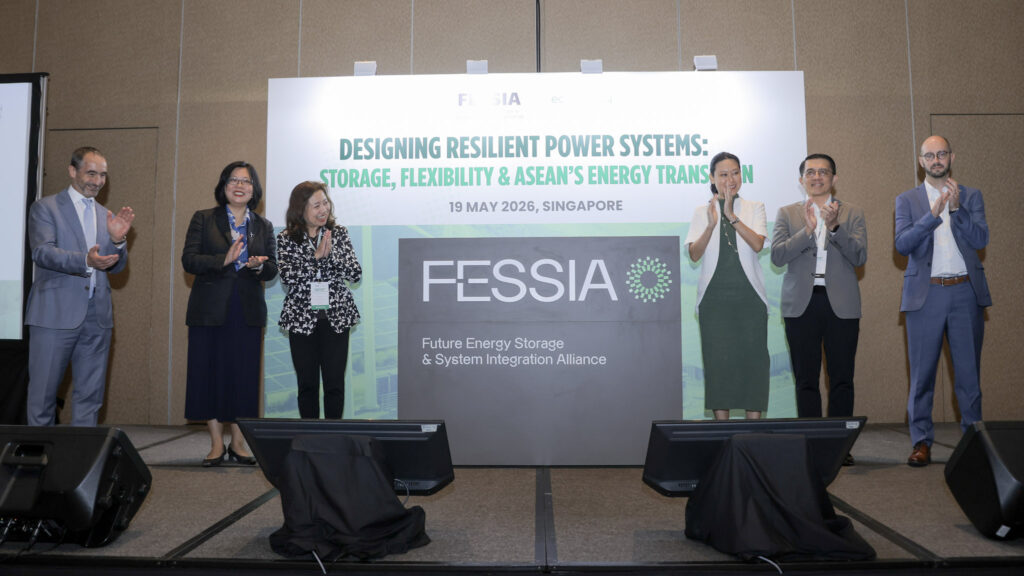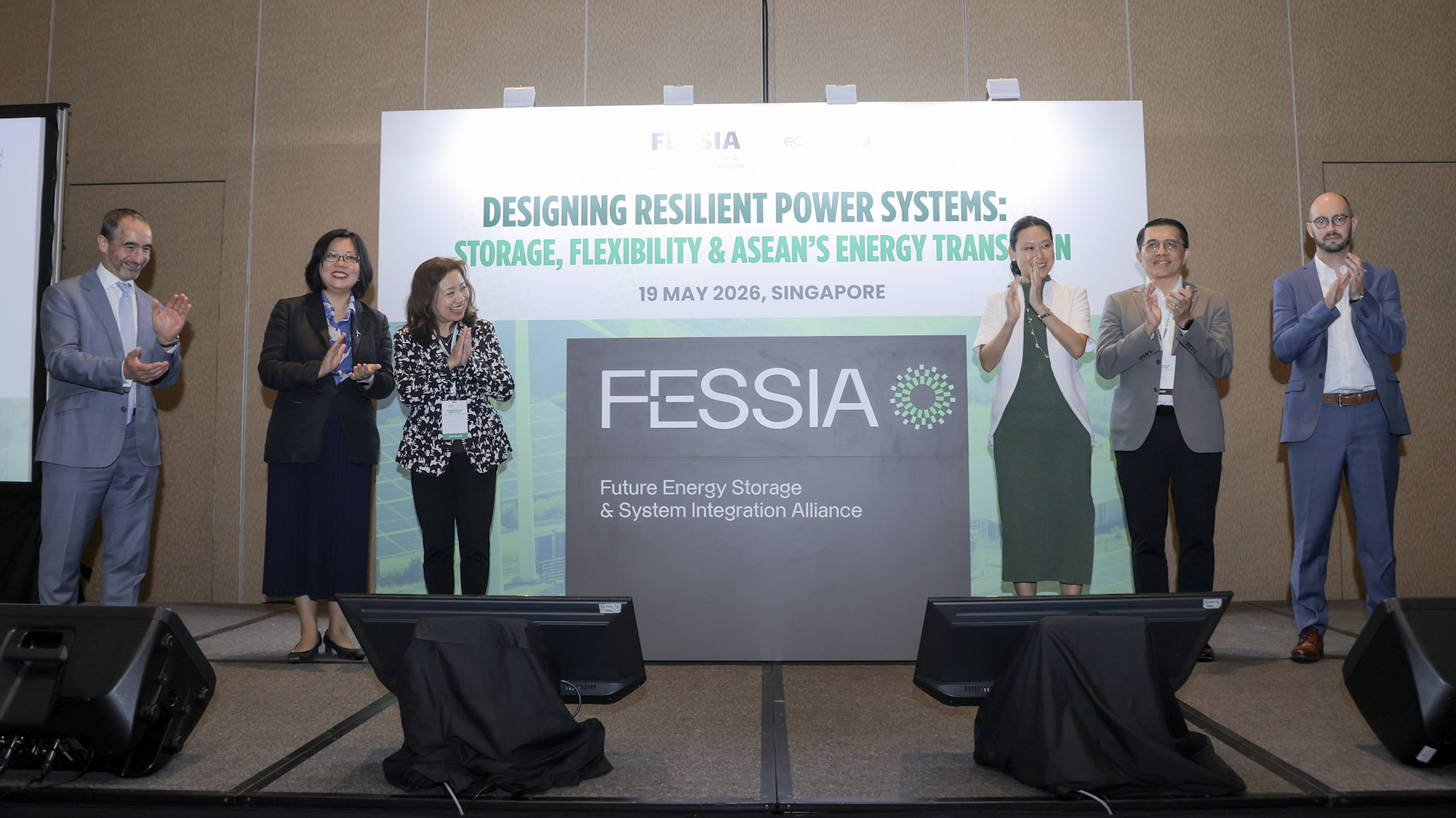
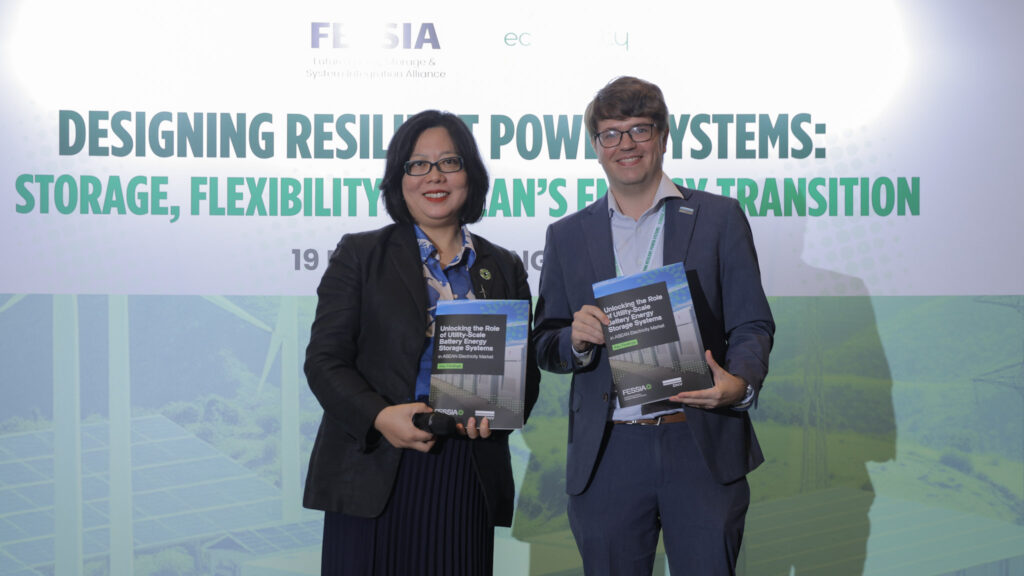
A new report from the Future Energy Storage and System Integration Alliance (FESSIA), developed with DNV, highlighted that South East Asia’s energy transition challenge was no longer technology readiness, but market and revenue design for battery energy storage systems (BESS).
Unveiled at Ecosperity Week 2026 in Singapore, the report — Unlocking the role of utility-scale BESS in ASEAN electricity markets — found that while variable renewable energy (VRE) deployment was accelerating across the region, ASEAN’s storage capacity remained limited at around 1.4GW, constraining grid flexibility and reliability.
Market design emerged as the key barrier, with BESS value still under-recognised in most ASEAN electricity markets, particularly for system services such as frequency regulation, peak shifting, and grid congestion management.
Without clearer pricing mechanisms and revenue structures, investment in storage would remain below levels required to support large-scale renewable integration.
Despite this, viable business models already existed. In markets such as Vietnam and the Philippines, ancillary services provided the strongest near-term revenue case for storage, while hybrid solar-plus-storage systems and energy shifting were already commercially feasible.
It also estimated that in the Philippines, BESS-enabled ancillary services could reduce system costs by up to US$275m annually and unlock $2.25bn in solar-plus-storage revenues by 2030, while Vietnam’s annual BESS investment could scale from $750m in 2026 to $5.7bn by 2030 under supportive frameworks.
A core conclusion was that revenue stacking across multiple services would be essential to improving bankability and accelerating deployment, particularly as ASEAN grids faced increasing volatility from rising renewable penetration.
Liming Qiao said the region was entering a new phase of system transformation where flexibility needed to be treated as core infrastructure rather than an optional add-on.
“The energy transition is entering a new phase where flexibility must become central to power-system planning, operations, and market design… The last 10% will depend on whether power systems can integrate renewables reliably at scale.”
From a grid systems perspective, storage would only scale if regulatory frameworks evolved to properly value flexibility services and reduce investment uncertainty.
Jhan Chan underscored the role of storage in addressing emerging grid constraints across the region:
“As grid constraints become an increasingly critical challenge, Arup sees energy storage as key to enabling higher renewable penetration and supporting a resilient, low-carbon energy transition across ASEAN.”