
By: Allison Brown, project manager, Mueller
Located 25 miles outside Washington DC, Loudoun County spans 517 square miles and is one of the fastest-growing counties in the US. Serving the county’s suburban eastern corridor, Loudoun Water delivers drinking water, wastewater and reclaimed water services across more than 1,400 miles of water main to over 87,000 customers, supplying an average of 26 million gallons per day (MGD).
Rapid population growth — up 84% between 2000 and 2010 and a further 35% from 2010-2020 —has intensified pressure on infrastructure originally installed in the 1960s. Ageing mains have increased the risk of breaks, service disruptions and non-revenue water (NRW) losses.
To address these challenges, Loudoun Water embedded Real Water Loss reduction into its 10-year Capital Investment Plan (CIP). Following a review of available technologies, the utility partnered with Echologics to pilot its EchoShore-DX fixed acoustic leak detection system in Sterling Park, a high-break-rate zone.
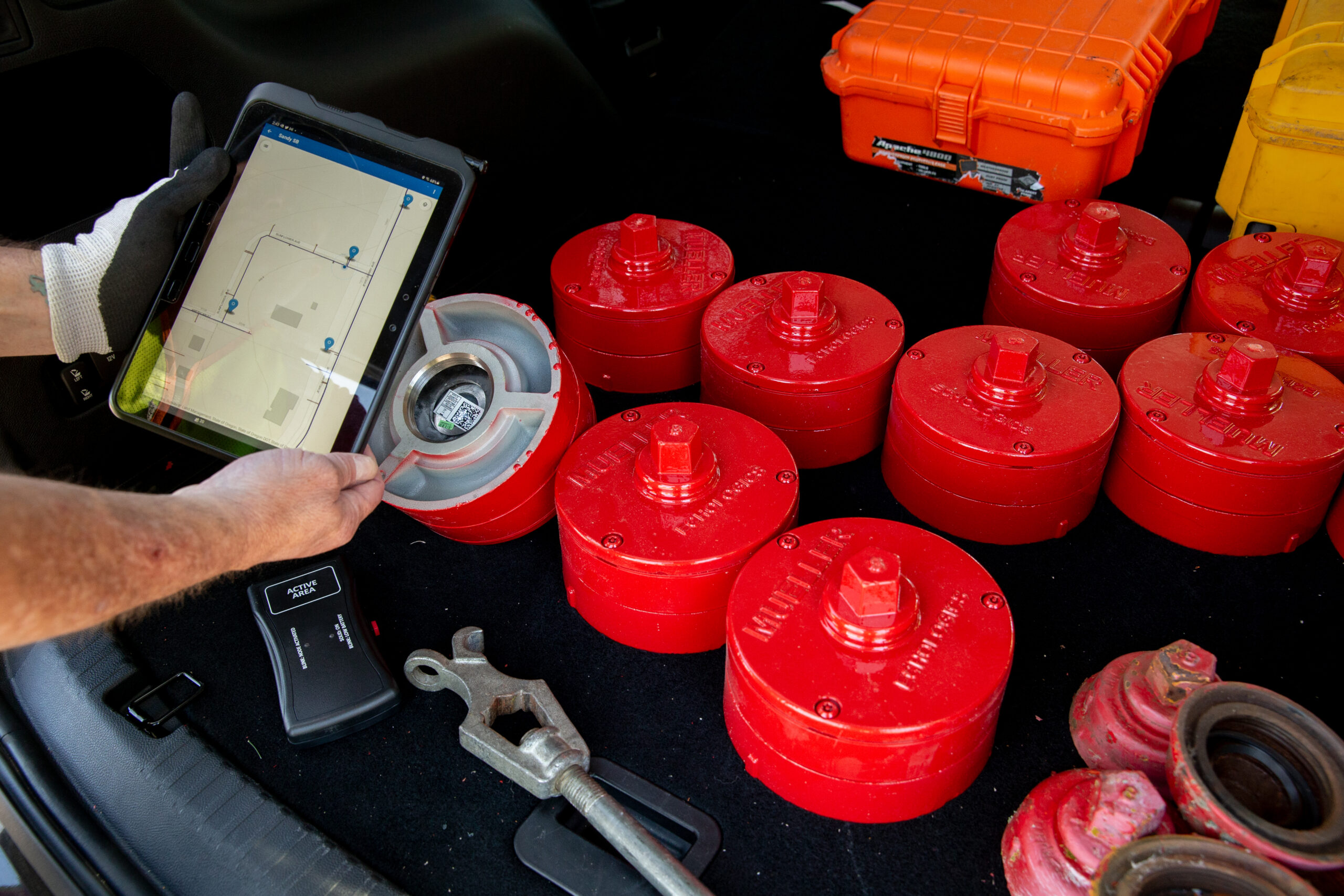
The sensors were placed on existing fire hydrants roughly 650ft apart to capture the sound profiles of the connected pipelines. The data is uploaded nightly to a secure remote server. The data is correlated between adjacent nodes and a dedicated analyst reviews the data to determine whether the persistent correlated noise (PCN) is actionable.
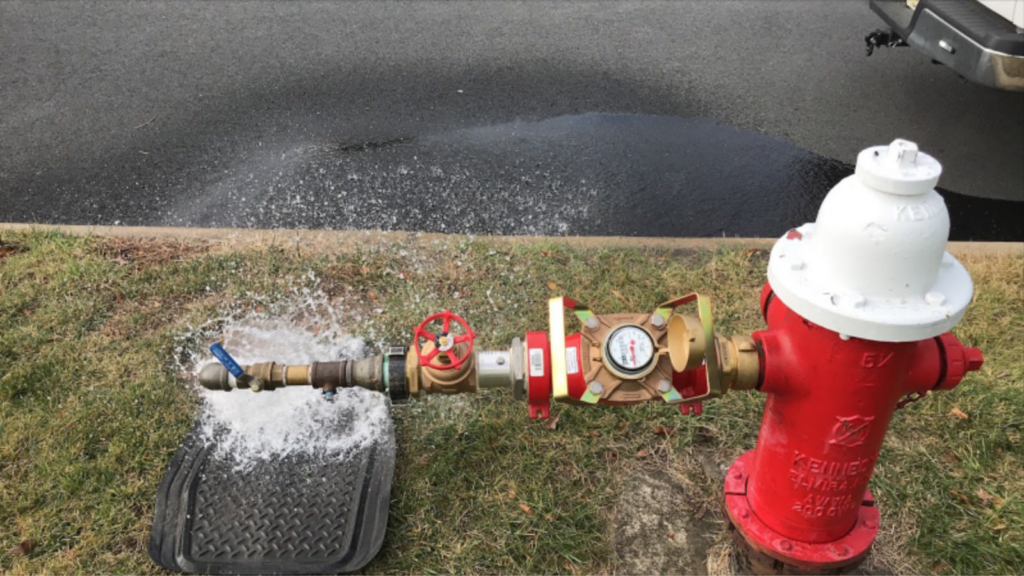
The network was monitored for 180 days, identifying “invisible” leaks without impacting customers. The installation of the 50 sensors took two days to install. Leak simulations were conducted at five hydrants with equivalent flows of 3-5 gallons per minute.
“Within the first month alone, nine leaks, including six main breaks and three hydrant leaks, were located and repaired,” said Kathleen Whitten, for Loudoun Water. “Having a real person verify the PCN data gives us confidence in the results. This early detection has allowed us to plan repairs, minimising costly emergency scenarios and reducing NRW.”
The pilot delivered measurable results: a 38% reduction in repair costs and improved operational efficiency through planned interventions rather than emergency responses. A total of 14 leak alerts were issued, with 12 confirmed as leaks. Early leak detection also reduced NRW and minimised customer disruption.
Following the pilot, Loudoun Water expanded the programme in phases. As of February 2025, 224 sensors are in operation, with 33 leaks detected. With average repair costs of US$13,000 per main break and $8,000 per leak, the utility reports that capital costs were recovered within three years.
For a fast-growing utility managing ageing infrastructure, continuous acoustic monitoring like the the EchoShore-DX has strengthened asset management, reduced water loss and improved service reliability — positioning Loudoun Water for long-term system resilience.