
By: Kevin Koshko, product manager for water treatment data management, Aquatic Informatics
The City of Kilgore, Texas delivers clean drinking water to about 14,000 residents through an extensive 160-mile distribution network. The system is operated by a team of five water professionals responsible for monitoring and managing flow, pressure, chemical usage, and disinfection residuals across multiple facilities.
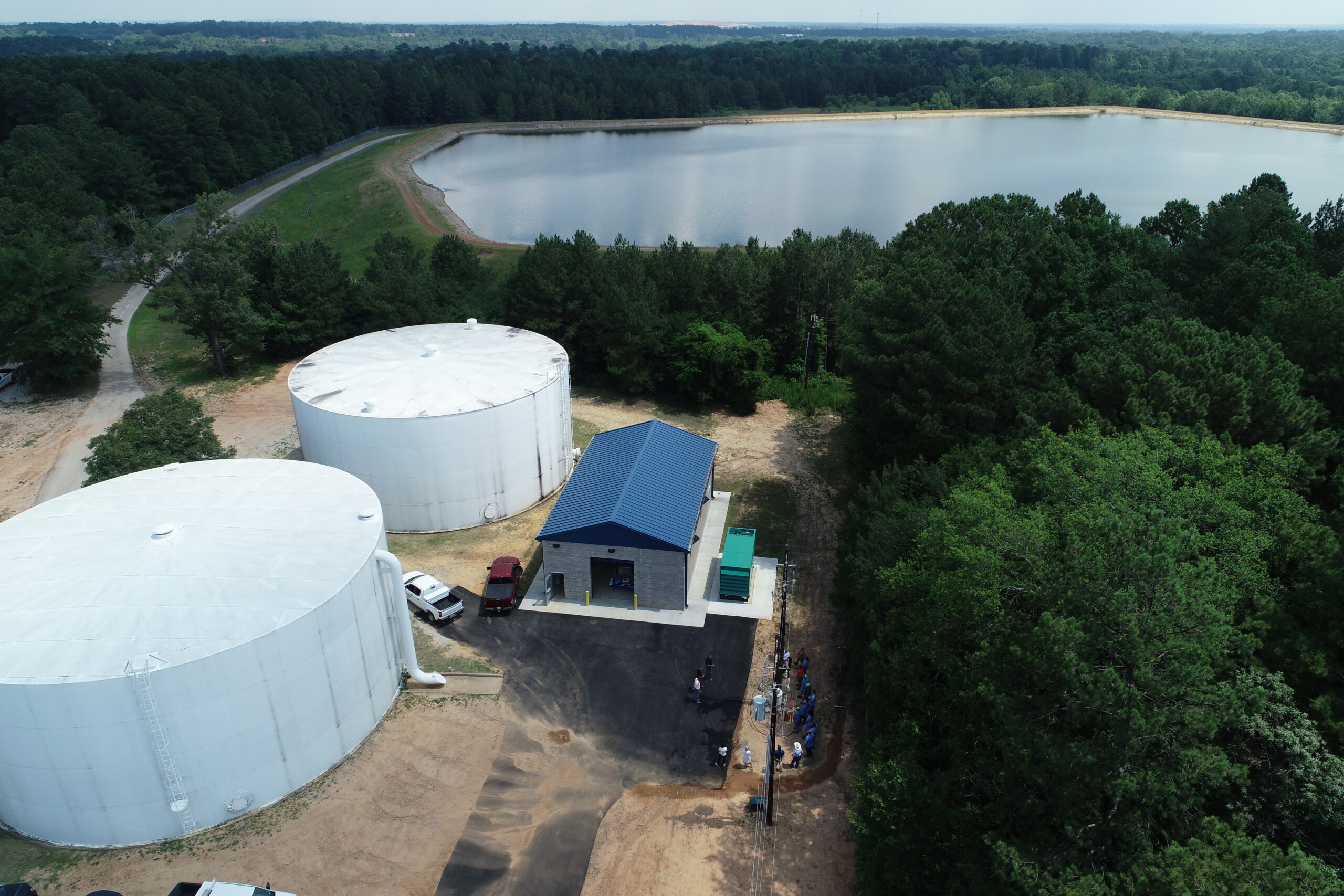
Kilgore’s water infrastructure includes a 3.5-million-gallons-per-day (MGD) surface water treatment plant, a 3.5-MGD groundwater treatment plant, seven groundwater wells, a raw water pump station, two water pressure plants, and more than four million gallons of storage capacity. Coordinating water flow and maintaining compliance across this system generates a significant volume of operational data.
Clay Evers, director of public works for the City of Kilgore, oversees water treatment operations and data management. For years, most operational data was recorded manually.
“We have multiple filing cabinets of daily data sheets completed by our operators,” said Evers. “I enter most of the production data into Excel when I have time or need to do a report or troubleshoot a problem.”
Some data was stored digitally through the city’s work order management system, but extracting it proved challenging.
“It is in a SQL database, so you must mine the data — essentially cutting and pasting into spreadsheets to create trend lines,” Evers said. “It’s labour-intensive and requires a certain level of sophistication.”
Technology barriers for small utilities
Like many small utilities, Kilgore faced barriers to adopting new technology.
“Our budgets are small, and our personnel are primarily focused on operations,” Evers explained. “Incorporating technology means changing processes that have been in place for years or even decades. Crossing that technology chasm takes time, training, and proof that the new system is better than the status quo.”
That proof came during a nitrification event in late 2023.
Nitrification event highlights need for better data access
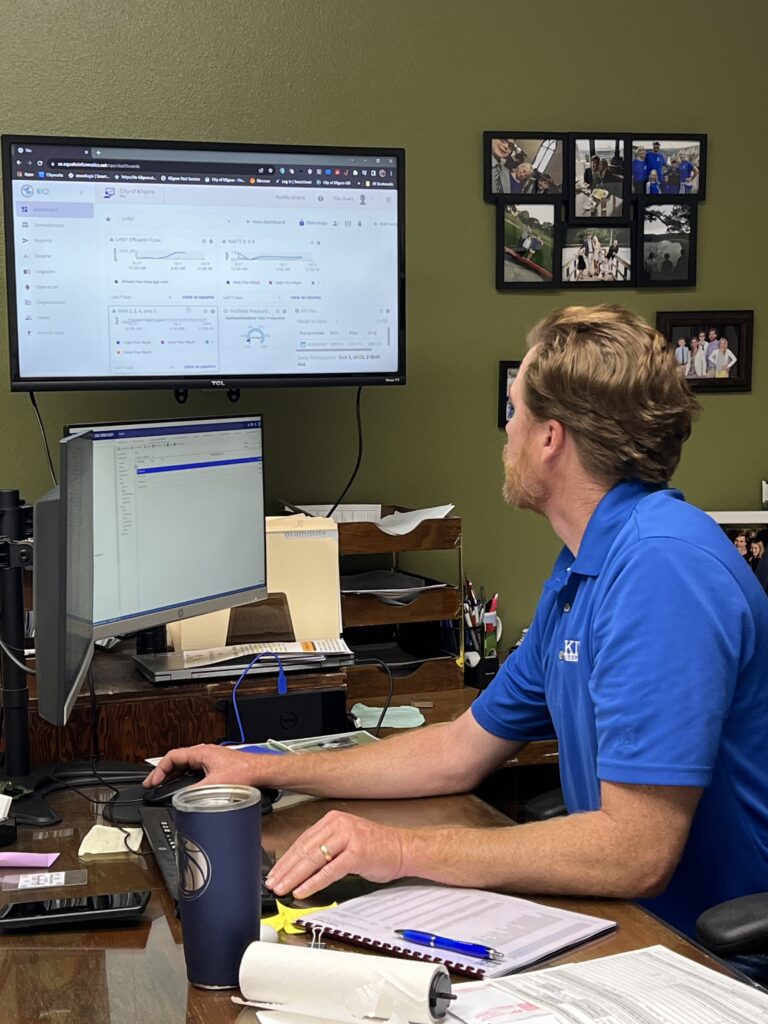
The city experienced difficulty maintaining acceptable chlorine residuals in its distribution system. To investigate, Evers began manually entering historical data into Excel to identify trends.
“By graphing the data, I could see the trend had started about three months earlier,” he said. “It was a real eye-opener. We needed to be analysing our data every day, not after the fact.”
The event ultimately required a free chlorine conversion, involving the removal of ammonia from the treatment process, followed by extensive flushing and additional diagnostic work — an expensive and disruptive response.
“These kinds of events are costly and preventable with modern data management,” Evers said.
Around the same time, Evers began researching how other small utilities were modernising their operations. That was when he received an email from Aquatic Informatics and booked a demo.
Automating daily production data with Rio
Kilgore implemented Rio, Aquatic Informatics’ software platform for regulatory compliance and operational data management.
Prior to Rio, calculating daily water production required manually locating paper records and subtracting meter readings from the previous day — repeated across seven wells.
“It was something we should all know, but it was very labour-intensive,” Evers said. “With Rio, that information is fully automated and available instantly.”
Operators can now view daily, monthly, and soon annual production trends with a single click.
“This helps us identify anomalies, forecast demand, and support conservation efforts,” Evers added.
Streamlining monthly reporting through SCADA integration
Rio also interfaces directly with Kilgore’s SCADA system, automatically calculating minimums, maximums, and averages for parameters such as filter turbidity and chlorine residuals — key inputs for monthly operating reports (MORs).
“The software does the math for us,” said Evers. “I can also compare SCADA data with operator entries and catch errors much more easily.”
Operators enter data either through the Rio mobile app or desktop interface, depending on preference. The mobile app, compatible with smartphones and tablets, has proven especially appealing to younger staff.
Before Rio, MORs took several hours to complete. Working with Aquatic Informatics implementation specialist Rebecca Henzi, Kilgore developed a Rio template that now auto-fills approximately 90% of the required report fields.
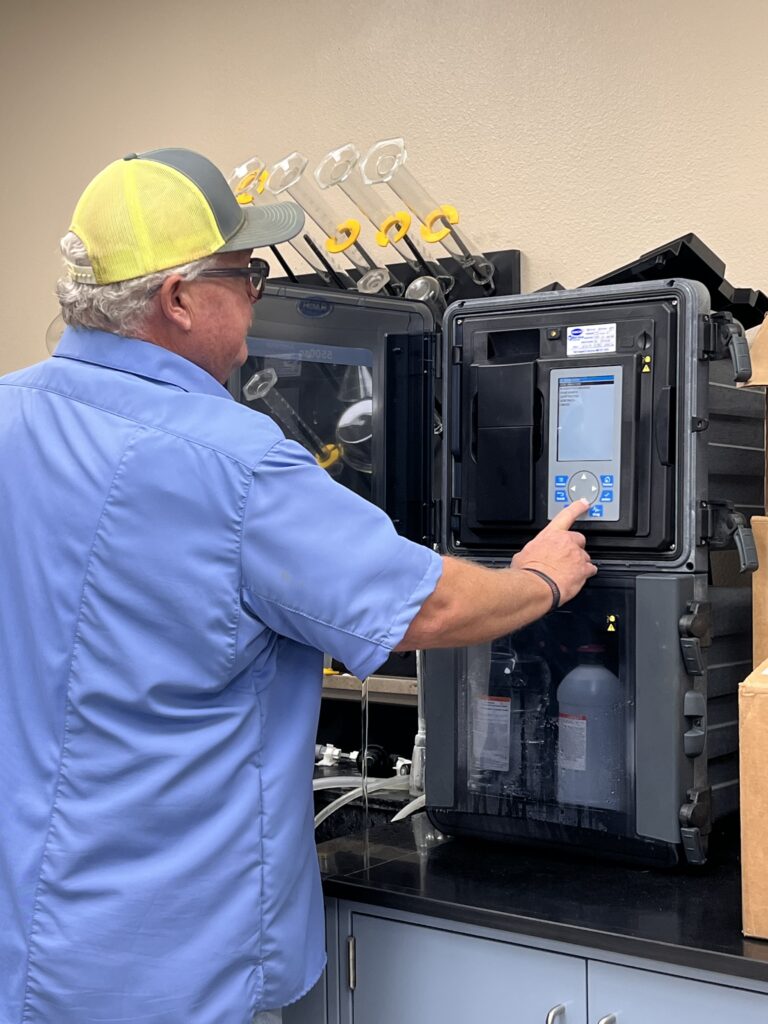
“Once a variable is entered into Rio, it flows automatically into reports, dashboards, and trend lines,” Evers said.
Improving visibility and operational efficiency
With centralised data access, Evers can quickly visualise trends in flow, chemical usage, and other operational parameters.
In one instance, Rio helped identify an unseen leak in a chemical line.
“We saw two consecutive days of chemical usage at 75 pounds, when we normally use 150 pounds,” Evers said. “That kind of data was never analysed before. Now it’s hard to miss.”
Over time, the growing historical dataset has become increasingly valuable — not only for daily operations, but also for long-term planning.
“When a consulting engineer asks for five years of operating data to design plant upgrades, having it all readily available is invaluable,” Evers said. “Good data ensures proper sizing and better decisions.”
Supporting long-term planning with fewer resources
With more than 20 years of experience in municipal water, Evers views technology as a way to eliminate unnecessary manual work and focus on strategic planning.
“The ability to quickly retrieve past data helps with maintenance scheduling, budgeting, and planning equipment replacements,” he said.
For Kilgore, Rio has proven that advanced data management is not just for large utilities.
“We have the same regulatory requirements as bigger utilities, but fewer resources,” Evers said.
“Rio is easy to implement, well-priced, and already saving us time. As we use more of its functionality, our capabilities will continue to expand — which is critical for a small utility focused on delivering safe drinking water.”