
By: Cal Hayes, general manager, Proco Products
For water utilities and municipal authorities, stormwater management is becoming more challenging as heavier rainfall events and increasing urbanisation place greater pressure on drainage infrastructure.
Impervious surfaces such as rooftops, parking lots and roads prevent rainfall from naturally soaking into the ground. Instead, large volumes of runoff enter storm drains, sewer systems and drainage channels, many of which were designed decades ago for very different hydrological conditions.
In cities that rely on combined sewer systems, where stormwater and sewage share the same network, intense rainfall can also cause sewage to flow backwards through Combined Sewer Overflows (CSOs), potentially contaminating waterways and urban areas.
The role of check valves
Check valves are a critical component of stormwater and wastewater systems. These passive devices allow fluid to flow in one direction while automatically closing to prevent reverse flow. They operate through flow velocity or differential pressure, without manual activation, electronic controls or an external power source.
When functioning correctly, check valves prevent discharges from treatment plants and outfalls from reversing into water supplies, help contain sanitary sewer overflows, and protect infrastructure from backflow. They can also mitigate water hammer, a potentially damaging pressure surge caused by sudden changes in flow velocity.
However, conventional check valve designs, including swing, flap, ball and disc valves, rely on mechanical components that can be vulnerable to corrosion, erosion and debris accumulation.
A swing valve, for example, uses a rotating disc that can wear over time, while ball valves can struggle to seat properly when exposed to abrasive slurries. Flap valves can also become obstructed or remain open when solids accumulate.
A different approach to flow control
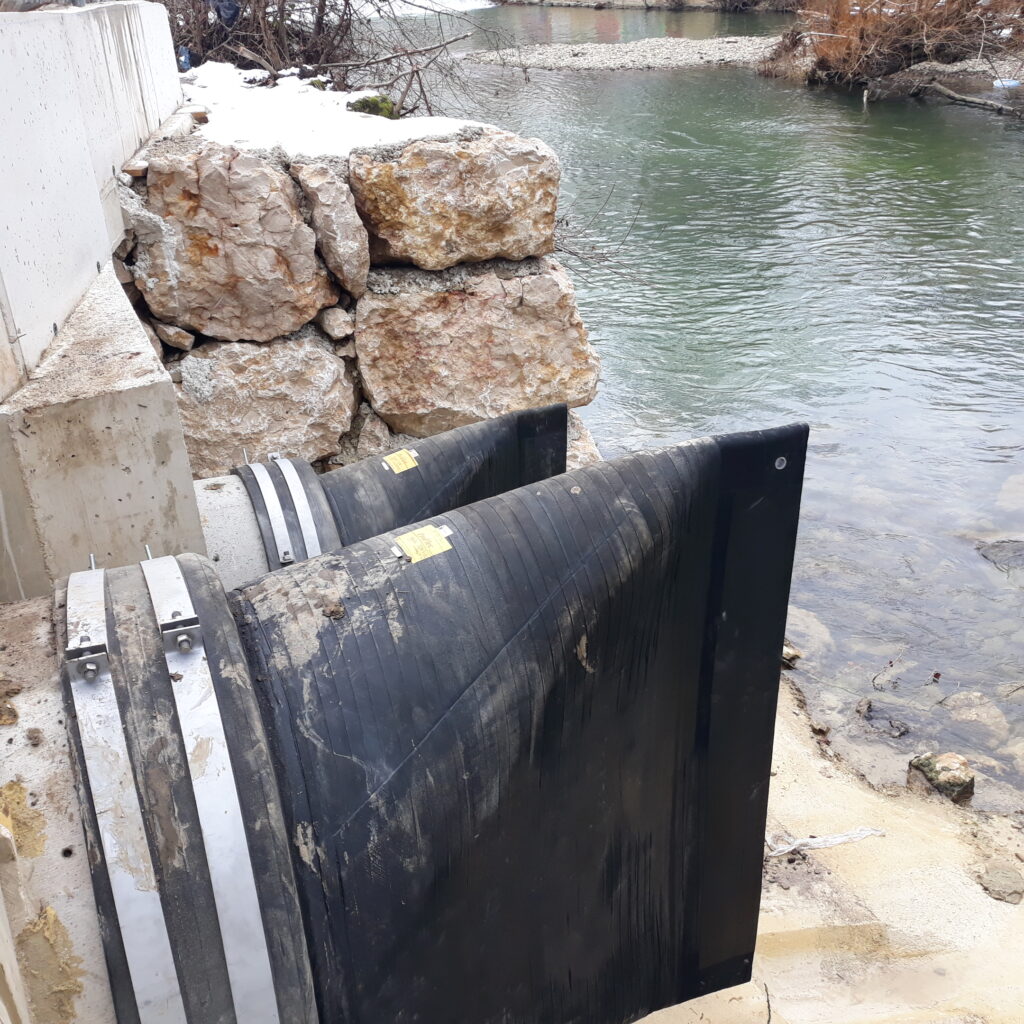
Duckbill check valves use a fundamentally different mechanism. Instead of a mechanical disc, gate or ball, they use a one-piece flexible elastomeric sleeve shaped like a duck’s bill.
Positive differential pressure opens the sleeve to allow flow. When the pressure differential reverses, the flexible lips close together to form a seal against backflow.
With no mechanical moving parts, pivot points, springs or metal components, duckbill valves eliminate several of the failure points associated with conventional check valve designs.
This makes them suited to stormwater outfalls and combined sewer systems, where flows can contain sand, grit and other suspended solids. The flexible elastomer can compress around trapped solids while maintaining a seal, helping the valve continue to operate under less-than-ideal conditions.
The material is also resistant to organic fouling, including algae and barnacles, which can be an issue in marine and tidal outfall environments. Depending on the elastomer specified, duckbill valves can also offer resistance to corrosive effluents and comply with ANSI/ NSF-61 requirements for applications involving potable water.
Operating temperature ranges of approximately -65°F to +250°F can accommodate a range of climate and process conditions. The valves also close without the loud impact associated with some swing and flap designs, which can be beneficial where outfalls are located close to residential areas.
Addressing water accumulation
Another consideration in stormwater outfalls and sewer manholes is water accumulation at the base of a check valve after a flow event.
Some duckbill valve designs incorporate a sloping bottom that allows the valve body to drain completely once flow stops. Certain designs can crack open at as little as one to two inches of head pressure, allowing even low flows to pass through rather than remain trapped behind the valve.
The sloping configuration can also help prevent rags, grit and other debris from settling within the valve.
Retrofitting existing infrastructure
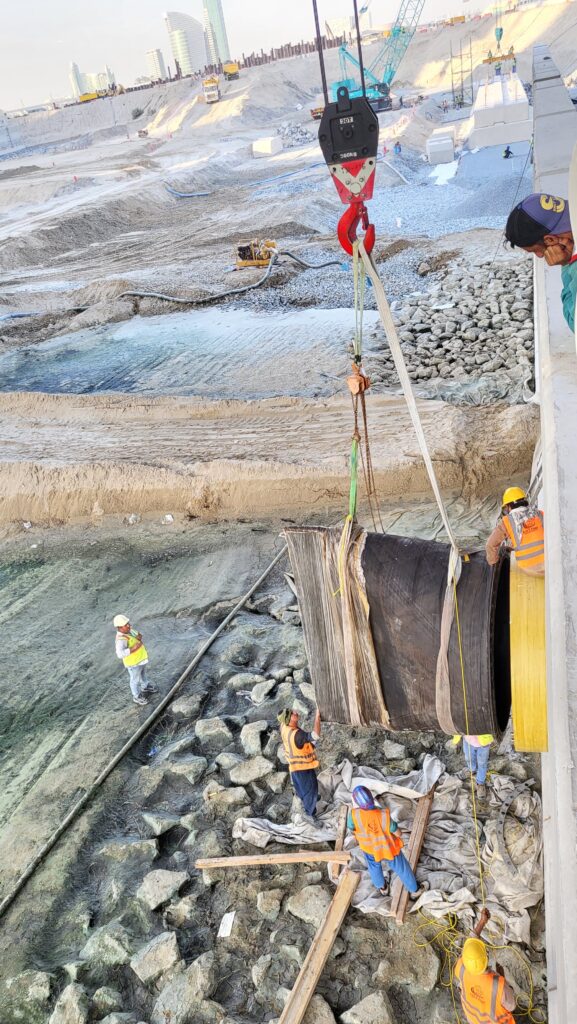
Duckbill check valves have been deployed at stormwater outfalls, CSO structures and sewer systems in configurations ranging from 1-inch residential drainage pipes to 108-inch large-bore outfall structures.
Their ability to be retrofitted onto existing infrastructure is relevant for cities dealing with ageing drainage networks. Upgrading backflow protection does not necessarily require extensive modification to surrounding pipework or structures.
One example is Long Branch, New Jersey, where Hurricane Sandy caused storm surge flooding and reverse flow through the city’s outfall network. Following the event, the city upgraded its drainage infrastructure by retrofitting rubber duckbill check valves at its outfalls, providing additional protection against flow reversal during storm surge events.
Lifecycle and maintenance considerations
The absence of mechanical components also has implications for maintenance and lifecycle costs.
Conventional mechanical check valves can require periodic inspection, cleaning and servicing as corrosion, wear and debris accumulation affect performance. Duckbill valves, by contrast, have no metal components to rust and no mechanical parts requiring routine maintenance.
Manufacturers report life expectancies of 35-50 years for duckbill valves under normal operating conditions, compared with approximately 5-10 years for some conventional mechanical check valves, depending on operating conditions and maintenance requirements.
The reduced maintenance requirement can be relevant for outfall structures that are difficult to access or submerged, as well as sewer infrastructure where confined-space entry creates additional cost and safety considerations.
Specifying for more resilient drainage systems
Stormwater resilience will increasingly depend on how well existing infrastructure can manage higher volumes and more frequent flow reversals.
Green infrastructure, permeable pavements, retention ponds and increased sewer capacity all have roles to play in a comprehensive stormwater strategy. At individual outfalls, CSO structures and sewer manholes, however, reliable backflow protection remains an important part of the system.
For utilities replacing ageing flap gates, swing valves or other mechanical check valves, duckbill valves offer an alternative technology based on a simple, passive elastomeric design. Their resistance to debris, corrosion and biological fouling, combined with low maintenance requirements and retrofit capability, makes them a technology worth considering as cities upgrade ageing stormwater infrastructure.